SKU: 40985676784
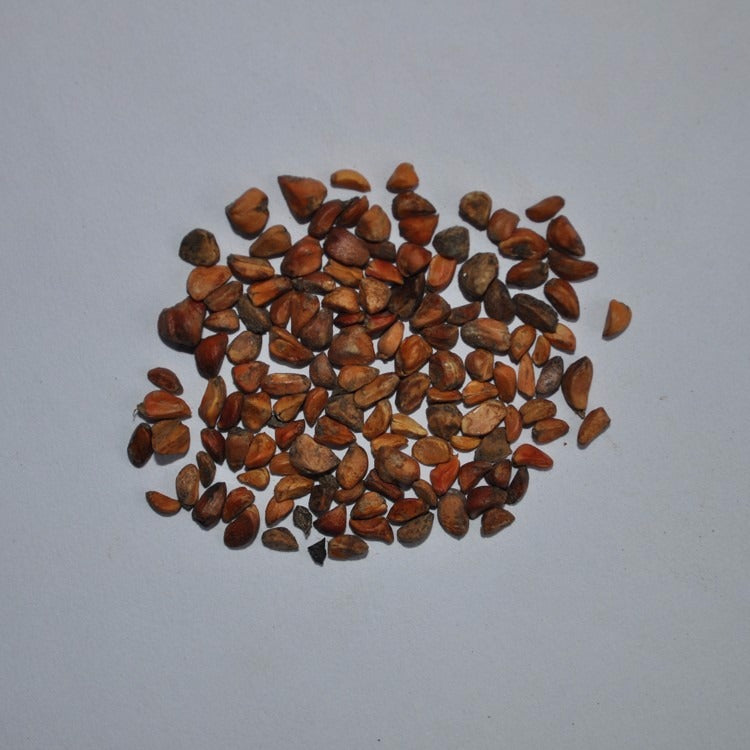
drift rose seeds

drift rose seeds Drift Red Rose Plant Seedlings Flower Seeds Perennial Growing Bonsai Corms Tubers Potted Planting Reblooming Fragrant Garden Roots Rhizomes Species Blooms Bulbs Gardening Tree

Sale price$22.38 Regular price$24.87
Save 10%

Pay in installments of $6.22 with ShopPay, AfterPay and Klarna

Shipping Estimate
USA
  • USA
  • CAN

Ships within 48 hours · Estimated delivery Jul 15 - Jul 20

Promo Codes Available:

For Your Every Summer RSVP, with Code: SUMMER15

Description

drift rose seeds Drift Red Rose Plant Seedlings Flower Seeds Perennial Growing Bonsai Corms Tubers Potted Planting Reblooming Fragrant Garden Roots Rhizomes Species Blooms Bulbs Gardening TreeAbout this item How to Grow Roses from Seeds Step 1: Treat Rose SeedsRose seeds need a much longer germination period than many flowers. If you arent careful, this extended moist storage can lead to the growth of molds that can threaten young rose seedlings. To prevent fungus spores from growing, you can destroy them with hydrogen peroxide. Add one half tablespoon of 3% hydrogen peroxide to one cup of water and soak the seeds in this solution for an

About this item

  • How to Grow Roses from Seeds

    Step 1: Treat Rose Seeds
    Rose seeds need a much longer germination period than many flowers. If you aren’t careful, this extended moist storage can lead to the growth of molds that can threaten young rose seedlings.
    To prevent fungus spores from growing, you can destroy them with hydrogen peroxide. Add one-half tablespoon of 3% hydrogen peroxide to one cup of water and soak the seeds in this solution for an hour.                                                                                                                                                                                      Step 2: Cold Germinate Seeds (Stratification)                                                        The natural rose germination process takes a few years. First, the rose hip needs to break down and decompose. After the seeds are fully exposed, they must undergo a period of stratification.Rose seed germination relies on a climate that experiences cold, moist winter months. You can simulate this winter environment using your home refrigerator.Place the rose seeds evenly spaced on a damp paper towel. Be sure to avoid overcrowding. Cover them with another layer of moist paper towels and seal the seeds in a plastic bag.Place the bag of seeds in a clean, empty crisper drawer. It would be wise to first sanitize the drawer with bleach and hot water to prevent mold contamination.Ensure the seeds remain moist throughout the entire stratification process. Add more clean water whenever they start to feel dry.Leave the seeds in the refrigerator for at least two months or until you are ready to sprout them.                                                                                                                                                                                                                     Step 3: Warm Germinate Rose Seeds
    Once the stratification process is complete, you can germinate rose seeds as you would other flowers. It is crucial to bring the seeds out of refrigeration into conditions warmer than 70 degrees.
    Ensure the seeds remain damp and leave them in a warm environment until they sprout. This can take up to a month, and it is likely that not all seeds will germinate.                                                                                                                                                                                                                                                  Step 4: Plant Rose Sprouts
    Add moistened seed-starter soil mix to seedling trays. Make a slight indentation for the rose seeds in each cell.
    The tiny tendrils that emerge are roots and must be handled very carefully. Gently remove the rose sprouts from the paper towel and place them root down in the seed trays.
    Cover the seeds with moist soil and leave the seed trays on a sunny windowsill. Use a clean spray bottle to mist the rose seedlings when they start to feel dry.
    For the best results, consider using Hoss Tools Deluxe Seed Starting Kit. This kit includes a 24-cell seed starting tray with a dome lid, seed-starter soil mix, fertilizer, and more.                                                                                                                                                                                                                                  Step 5: Transplant Rose Seedlings
    As the rose seedlings grow, pay close attention to the seed leaves so you know when to transplant. Wait until the true leaves develop, which take on the typical rose leaf appearance.
    Gently loosen the dirt from the tray cells and slide the seedlings free. Move them to individual containers and let them continue to grow for about a year before you transplant them outdoors.

  • Caring for Young Rose Plants

    Give your rose seedlings the support they need to grow strong stems and lush foliage. Add half-strength fertilizer to each planting location.
    Not all fertilizers are equal. Use a high-quality blend like Dry Fertilizer for guaranteed results.

    • How long does it take to grow a rose from seed

      Growing roses from seeds is a lengthy process. Without proper stratification, it can take multiple years for seedlings to emerge.
      Even the fastest-growing roses will likely take two full growing seasons to produce beautiful blooms.

    • Do roses grow true to seed

      Heirloom rose varieties grow true to the parent plants, while hybrid varieties are less predictable.
      The task of growing roses from seeds is very involved. For this reason, most gardeners prefer to grow roses from cuttings.
      If you want to experiment with cross-breeding unique roses, then you need to grow them from seed.
      To get predictable results, you must control pollination. This will ensure that your homegrown roses will grow true to color.

    • How to grow roses

      All you need to know about growing roses, in our detailed Grow Guide.Roses are some of the most beautiful and versatile garden plants. They come in a variety of forms, from patio roses to shrub roses, ramblers and climbers. Nearly all of them make an excellent cut flower. Single-flowered roses are great pollinator plants, while some species are used by leafcutter bees to make their nests. Most roses need sun and heavy soils to thrive, but some will grow well in partial shade and poorer soils. There really is a rose, or three, for every garden.Key points about growing roses
      Most roses thrive in full sun.Roses need rich, moist but well-drained soil.Water roses regularly so the soil stays moist but not waterloggedRoses are hungry plants. Mulch annually with organic matter such as well-rotted animal manure, and consider using a rose feed to promote flowering in summer.Prune roses annually to promote healthy growth, control the shape and encourage flowering
      Plant bare-root roses from November to March. Container-grown roses can be planted at any time of year.

    • How to grow shrub roses

      Shrub roses and English roses come in a huge range of sizes and colours ââ‚?some can grow to 2m in height. Shrub roses are typically robust, healthy, repeat-flowering plants offering colour when other shrubs have finished flowering. Some shrub roses have a good fragrance, but if you want a scented shrub rose then English roses are for you. Shrub roses and English roses are perfect for growing in a mixed border, large container or as part of a rose garden. Some can also be trained as climbers or used to grow into a hedge.

    • How to grow climbing roses

      Climbing roses are the perfect plants to add height to a garden, without being too vigorous. There are climbing roses available in all the popular rose categories ââ‚?hybrid tea roses, bourbons and English roses. Choose from double or single flowers, thornless or scented. Climbing roses can be grown up house walls, along garden fences, over pergolas or up large obelisks.

    • How to grow rambling roses

      Rambling roses are often confused with climbing roses. Ramblers are far more vigorous than climbers, and bear one fantastic flush of flowers, usually in June, followed by colourful hips. Climbing roses often repeat flower and have larger flowers.Rambling roses need plenty of space as they grow quickly. They’re ideal for growing up a tree or tumbling over a wall. They're perfect for covering an eyesore in the garden, such as an unsightly shed or out-building.A rambling rose looks great growing up into a tree, especially an apple tree, providing flowers after the apple blossom fades but before the fruits form. In this video guide from Gardeners' World, Monty Don shows you how to plant two different rambling roses ââ‚?'Wedding Day' and 'Sander's White'. He details what conditions a rambling rose needs, how to prepare the soil, and how deep to plant it so it settles in well over autumn and gets off to a good start in spring. You'll also find out how far from the tree to plant the rose and how to encourage it to climb up the tree.

    • How to grow patio roses

      Patio roses are small enough to grow in pots. They are compact in habit and thrive in lighter soils than many other rose types. Patio roses are not as long lived as other types of rose, but they're easy to manage and remain compact if hard-pruned each spring.

    • How to grow ground cover roses

      Ground cover roses have a trailing or spreading habit. They're ideal for growing in a container, at the front of a border or on steep banks. Many are modern introductions have good disease resistance. If given the right conditions, ground cover roses can suppress weeds.

    • Roses to grow by colour

      Roses come in a huge variety of colours. Browse our lists of roses by colour, below, for the best one for your garden:
      Pink roses to grow
      Purple roses to grow
      Yellow roses to grow
      Beautiful red roses to grow
      Orange roses to grow

    • Growing roses in pots

      It's possible to grow roses in pots, meaning you can grow roses in even the smallest gardens. While all but rambling roses can be grown in pots, shorter growing bush varieties, or ‘patio roses', are ideal. They’ll do best in large, deep containers ââ‚?an absolute minimum of 50cm in diameter and the same in depth ââ‚?to keep their roots cool and moist during summer.In hot, dry weather, soak the compost every two to three days, and feed regularly.

    • What to grow with roses

      Many plants can be grown with roses to great effect. Climbing roses work well grown with clematis. Rambling roses can be trained to grow up a tree. Patio roses work well with a variety of other plants suitable for growing in pots, while shrub roses can be grown in a mixed ornamental border, alongside nepeta, lavender and other herbaceous perennials.

    • When to plant roses

      The best time to plant roses is in autumn, when the soil is warm and the water table is at its highest. Roses will establish quickly before becoming dormant, and then burst into life again in spring. Roses come as potted plants or as bare-root plants (sold without soil on the roots). Technically, you can plant a potted rose at any time of year and a bare-root rose from October to March, but autumn remains the best time to plant roses.

    • How to plant roses

      Plant roses in a well-prepared hole with added compost to improve soil structure and aid water retention. Back-fill with soil and firm in well, then water thoroughly.In this Gardeners' World programme clip, Monty Don shows you how to plant shrub roses. Watch as he plants the yellow-flowered, myrrh-scented rose 'The Pilgrim' in the Cottage Garden at Longmeadow. He explains how to prepare the soil and dig the hole, how and why you should add mycorrhizal fungi, and what rose care to provide to ensure the rose settles in well.

    • How to plant bare-root roses

      Planting bare-root roses during the dormant season is cheaper than planting container-grown roses, because the growers don't need to water and feed the plants when they're dormant, and they weigh less and take up less room when shipping. What's more, there's a far greater selection of bare root roses available to buy than container-grown roses, giving you more choice.You can plant bare-root roses at any time between October and the end of March, but planting them in autumn helps them establish more quickly because the soil is still warm from summer, and is typically moist.

    • Pruning roses

      Pruning is essential for the overall health, vitality and appearance of roses. Winter is the key time to cut back most varieties, except rambling roses, which are pruned in summer immediately after flowering.The basic principles of pruning are the same: cutting back hard will promote the strongest growth, while light pruning will result in less vigour. The other basic rules include cutting to an outward-facing bud to prevent compacted growth, and removing closely positioned stems that might rub or compete for space. Also remove stubby ‘snagsââ‚?(short, dead lengths of stem with no growth on them) and thin, twiggy stems, which are unlikely to produce anything worthwhile in terms of growth and flowering potential.

    • Growing roses: problem-solving

      Roses suffer from many problems, including black spot, aphids, die-back and bloom balling. In this Quick Tips video, Richard Jones explains why you shouldn't worry about leafcutter bees damaging your rose leaves:Find more solutions to rose growing problems, below.
      Rose problems solved
      Trouble-free roses
      How can I stop die-back on roses?
      Rose black spot
      Rose bloom-balling

    Why Seedsplant ?

    • Experts in the field
    • Family owned and operated - 100 years
    • Rigorous quality control
    • We strive for your success by offering the bulb size you need
    • Affordable quality

    Flower Bulb Facts of Life

    Bulbs: Beauty In a Bottle:

    Bulbs are a natural product. And, as such, follow a natural cycle of growth and rebirth. Enjoying their fabulous flowers means planting ahead in one season then results the next. Bulbs are among the easiest flowers to grow, not only are they affordable, but bulbs offer the most stunning colors available. Even the most novice gardener can create a breathtakingly beautiful spring garden with bulbs.

    What's a Bulb?

    A flower bulb is really a self-contained flower factory. Within this marvelous little package is nearly everything the flower needs to come to life! Split a bulb open, for instance, and you'll see its baby flower bud, leaves, roots, stem and food supply. All bulbs need from you is to be placed in the ground at the appropriate season of year, given a liberal drink of water then left to work their magic.

    Variety:

    Flower bulbs come in seemingly limitless varieties which makes them perfectly suitable for any garden design you can dream up.

    Is It a bulb ?

    The Difference Between Bulbs, Corms, Tubers, Roots,Today, people commonly us the term 'bulb' to refer to any plant that stores its own food underground. But, in truth, many popular 'bulbs' are not true bulbs at all. These include corms, tubers and roots and, while they all produce beautiful flowers, technically the plants are different

    When To Plant

    In fall, after soil temperatures are below 50ºF/10ºC. These bulbs bloom the following spring and require the cold winter temperatures for development. But let's say winter arrives and your bulbs are still in their bag. Not to worry! Bulbs are pre-programmed to grow so even if you have to plant through snow, plant your bulbs!

    How To Plant

    Most bulbs thrive in either full or partial sun and in almost any location with good drainage. Avoid planting at the base of hills or under drainage pipes where water collects and will rot the bulbs.

    • Dig a hole
    • Drop in the bulb
    • Water thoroughly

    Tips For success

    • A larger grouping of flower bulbs are far more fab than just a few planted here and there. Think clumps of color.
    • Buy the largest bulbs you can find.
    • Note the flowering times. Not all bulbs will bloom at the same time. A little planning will greatly increase the number of months you will enjoy bulb flowers.

    Passionate About bulbs

    Generally speaking, the best predictor for gardening success is bulb size. Almost always, the larger the initial bulb size planted, the larger and stronger the plants will be, producing more flowers. The first year end result will be noticeable to anyone.The best predictor for gardening success is bulb size.

    Shipping

    All items are shipped usually within 2 working days (usually sooner) except plug plants. Plants only dispatch Monday-Thursday to avoid problems with live plants sitting in a postal depot over the weekend. During busy periods , due to the nature of product and extra care needed when packing and preparing for post, please allow up to 7 days for delivery (depending on day purchased). Plants are only dispatched when crops are ready to travel , therefore some multi orders may be delivered separately and occasionally it may be necessary to hold back dispatch until plants are ready. Shipping is either via Post  or 24/48 Hour courier depending on order size/weight etc. at our discretion. Please be patient when ordering plants as you cannot rush nature. Please be aware delivery dates shown by Seedsplant are estimates only and do not apply to live plant orders. Any orders returned to us by Post or Courier will incur a further postage charge to resend.

    Returs

    You may return all unopened items within 14 days of delivery for a full refund less P&P charges. Any items received damaged in transit must be notified in writing/email within 24 hours of receipt. Live plants should arrive in perfect condition , If however for some reason they do not please contact us immediately upon receipt. A full refund including original P&P will be made for any items not as described or wrong part no etc. All returns must include your full details with a copy of original receipt. You may cancel any transaction as long as notice is received before item(s) are / have been dispatched.

    Contact us

    You can message us through Seedsplant messages , otherwise You can write to us by email :[email protected]

    Shipping Notes
    • Free Standard Shipping on $100+ Orders to the USA.
    • Except Preorder products are shipped in 48 hours.
    • Delivery to the USA:
    1. Standard Shipping : 3-10 business days
    • If time is of the essence, please consider selecting expedited delivery for faster service.
    Exchange/Return Notes
    • We offer a 30-day return/exchange service after receiving.
    • Final sale items are not eligible for returns or exchanges.
    • To process your return/exchange, please contact us at [email protected]
    • Please click here for more details>>> Return & Exchange Policy
    SKU: 40985676784

    Discover Niche Categories That Outsell drift rose seeds

    Top-Converting Item to Boost Your Average Order

    4.1 ★★★★★
    Based on 180 reviews
    Sort
    Highest Rating
    Newest First
    Oldest First
    Product Reviews
    L
    Verified Purchase
    Levi Turek
    Birmingham, US
    ★★★★★ 5
    A must read
    Format: Kindle
    This series is a must read if you love Star Wars post Endor. The galaxy is still in a struggle to see who is on top. With many a individual falling through the cracks in galactic society.
    WAS THIS REVIEW HELPFUL?YesReportShare
    Reviewed in the United States on October 23, 2025
    L
    Verified Purchase
    L. W. Swint
    Waukegan, US
    ★★★★★ 4
    One man's quest for vengeance
    Format: Hardcover
    "A long time ago in a galaxy far, far away..." It is the time of a falling empire, a time of betrayal and vengeance. This is the story of the last of the mysterious Imperial Guards of the Emperor Palpatine. It is the story of his quest to seek justice for the galactic ruler he served, and for his fellow comrades in arms, who gave their lives in that service. "Star Wars: The Crimson Empire Saga," tells the tale of Kir Kanos, the sole survivor of the scarlet clothed guardians of the Emperor, first shown in "Star Wars, Episode VI: Return of the Jedi." Over more than a decade of Dark Horse Comics publishing history, starting in 1997 to its long awaited conclusion in 2012, "Crimson Empire" reveals the history of these elite soldiers, "the best of the best," trained for one purpose: to serve the Emperor of "the first Galactic Empire." This 504 paged hardcover book collects the following stories: Star Wars: Crimson Empire #1-6 (1997) Star Wars: The Bounty Hunters (Kenix Kil) (1999) Star Wars: Crimson Empire II: Council of Blood #1-6 (1999) Star Wars: "Hard Currency" (Dark Horse Extra #21-24) (2000) Star Wars: Crimson Empire III: "The Third Time Pays for All" (Dark Horse Presents #1) (2011) (Note: The above is also the opening passage to Crimson Empire III #1) Star Wars: Crimson Empire III: Empire Lost #1-6 (2011) Star Wars Handbook Volume 2: Crimson Empire (1999) "The Crimson Empire Saga" begins with an ending; the final defeat of the Emperor Palpatine by his long-time foes, the Rebel Alliance, led by the legendary siblings, Luke Skywalker and Leia Organa Solo. But unbeknownst to those fighting to free the galaxy from Palpatine's tyranny, treachery also played a role in the Emperor's downfall. In a stunning turn of events it is revealed that one of those thought to be most loyal to Palpatine, a member of the Imperial Guard itself, betrayed his master in an attempt to seize power for himself. To insure the success of his treason, Carnor Jax also ordered the assassination of all the surviving Imperial Guard. But in his arrogance, the traitor underestimated the skill of the warriors he had trained with. Though faced with the overwhelming force of an army of stormtroopers sent to eliminate them on their training world Yinchorr, one Imperial Guard survived the massacre. Kir Kanos, the last of Emperor Palpatine's Imperial Guard lived on, to seek vengeance on Carnor Jax, and all those who had betrayed his Emperor. The core "Crimson Empire" trilogy is the creation of writers Mike Richardson and Randy Stradley, and artist Paul Gulacy, and they have produced an exciting adventure of Star Wars action, intrigue and emotion. The first "Crimson Empire" 6 issue comic mini-series was published in 1997, in the early years of what came to be called the "Star Wars Expanded Universe." The "EU" is an ongoing showcase for the continuing "adventures of Luke Skywalker" in novels, comics, computer games and more, as well as for other characters and worlds from the movie and now television saga envisioned by George Lucas. But the Expanded Universe also highlights original ideas based on characters and situations created by Mr. Lucas. "Crimson Empire" represents a prime example of talented imaginations thinking, 'what if we told a story about the red cloaked guards seen in "Return of the Jedi?"' In Kir Kanos, Richardson, Stradley, and Gulacy have created a classic Star Wars anti-hero/hero. Along with such Expanded Universe creations as Grand Admiral Thrawn, Mara Jade, Quinlan Vos, and Asajj Ventress, he is one of the most intriguing characters in the Star Wars Universe. Kanos is a highly trained warrior with a steadfast moral code, whose quest for vengeance anchors "The Crimson Empire Saga." It is this focus on the lead character's ultimate goal that is one of the achievements of the series. This dramatic strength, when adhered to, allows the comic creators to truly delve into their original characters and concepts without having to include or depend on the more famous Star Wars heroes and villains, although some appear in supporting roles. It is a testament to the makers' storytelling abilities that as the reader follows this tale of Kir Kanos' road to revenge, one becomes sympathetic to the character's cause to avenge the death of one of the most evil men who ever lived in any galaxy! A special highlight of "Crimson Empire" is the artistry of Paul Gulacy. Mr. Gulacy has a distinctive style in the sequential art medium; a clean precise vision that combines traditional comic book panel progression with simulated photographic technique. For example, Mr. Gulacy rarely uses motion lines in his comic art, except to depict the movement of a lightsaber, or in the case of Kir Kanos' preferred weapon, the force pike, a doubled-bladed long staff. This style gives Mr. Gulacy's work a heightened sense of realism. In the first "Crimson Empire" mini-series, Mr. Gulacy is inked by P. Craig Russell. In "Crimson Empire II: Council of Blood," he is embellished by Randy Emberlin. "Crimson Empire III: Empire Lost" saves the best for last as Mr. Gulacy produced full pencil and ink artwork for the third mini-series. He was always his best inker. This "Crimson Empire" collection also offers the reader the opportunity to see the evolution and advancement of comic coloring from 1997 through to 2012, the year of this special compendium's release. Dave Stewart created the color art for Mr. Gulacy's pencil work on the first two installments of the prime comic trilogy and the results display a marked improvement over the flat colors long produced in comics of the past. But with "Crimson Empire III," the most recent part of the saga, the color rendering of Michael Bartolo shows an even more nuanced use of tone and hue over Mr. Gulacy's art. Thanks in no small part to the computer age, comic coloring has come a long way from the days of newsprint. Another highlight of "The Crimson Empire Saga" is the inclusion of two addition stories within the thick hardcover. "How the Mighty have Fallen" is a tale written by Randy Stradley, and illustrated by Javier Saltares and Christopher Ivy. Published in 1999 as part of the Star Wars: The Bounty Hunters comic series, it relates how Kir Kanos created the secret bounty hunter identity Kenix Kil,to better hide from members of the fallen Galactic Empire that were hunting for him across the stars. The second adventure, the short story, "Hard Currency," was published in Dark Horse Extra, a newspaper-like fanzine released from 1998-2002, and features Kenix Kil teaching an enemy the cost of betrayal. It was scripted by Mr. Stradley, and drawn by Isaac Buckminster Owens. There is a great deal to enjoy in this "Crimson Empire" collection but it is not without flaws. While the premiere "Crimson Empire" mini-series succeeds in being an enthralling adventure on every level, "Crimson Empire II: Council of Blood" sometimes suffers from a story that concentrates too much on subterfuge and political power-plays; so much so that the series' starring character, Kir Kanos, seems rather to be a supporting player in his own story. The long-awaited third part in the "Crimson Empire" trilogy, "Empire Lost," improves on the faults of its predecessor but still has a sometimes convoluted plotline. Another flaw in the multi-part saga is the character arc of Mirith Sinn, the brave and beautiful Rebel Alliance commander who plays a major part in most of Kir Kanos' exploits. The series writers, Mr. Richardson and Mr. Stradley, showcase the evolution of the relationship between these two driven individuals, a relationship that has an undeniable chemistry. Mirith and Kir Kanos share a bond, a bond that is complicated by violent loss. But the complexities of their relationship are sometimes handled in conflicting ways from story to story, resulting in confusion for the reader in understanding the otherwise strong character of Mirith Sinn. Still another flaw in this collection is the editorial decision not to include all the striking covers painted by artist Dave Dorman for the 18 individual comics in the "Crimson Empire" trilogy of mini-series. While it is gratifying to see 6 of Mr. Dorman's contributions to the saga, notably his special wrap-around cover painting to the first "Crimson Empire" trade paperback reprint volume, as well as the "Crimson Empire Handbook" cover, this reviewer regrets the omission of the artist's 13 other paintings. Nor was the sole "variant" cover to "Crimson Empire III" number 1, drawn by Mr. Gulacy included, and it was the only cover he created for the entire series. It is doubly disappointing when the collection showcases Mr. Dorman's cover to that same comic issue twice in the book! This reviewer would have also been appreciative of a written introduction or history of the creation of the "Crimson Empire" series; and a feature that explained the long wait of 13 years before the concluding chapter in the trilogy was finally released for fans of the saga to enjoy. These editorial choices could have then given this hardcover collection the more appropriate title, "The Complete Crimson Empire Saga." Despite the above shortcomings, this is a very special Star Wars comic collection. From one Star Wars fan to any who read this review, I highly recommend you put on some of John Williams' immortal Star Wars music, sit back, open this hardcover and let yourself be taken away to that "galaxy far, far away" we love so much!
    WAS THIS REVIEW HELPFUL?YesReportShare
    Reviewed in the United States on September 18, 2012
    J
    Verified Purchase
    Jonathan Miller
    Bozeman, US
    ★★★★★ 5
    One of the best Star Wars comic series of all time.
    Format: Kindle
    Crimson Empire was the first Star Wars comic that I read. Stories like these are what kept Star Wars alive and fresh during the nearly 20 years between films. I love the stories about those minor characters that you see in the films. When you saw the Crimson Guard with the Emperor for the first time, you knew there was something fascinating about these guardians of the most powerful being in the universe. This story delves into some of those characters. The art is fantastic, sort of that stylized 90's colorful art. Awesome battle scenes. It really captures the imagination. Great story, give it a try. I highly recommend getting a paper copy of this trade.
    WAS THIS REVIEW HELPFUL?YesReportShare
    Reviewed in the United States on August 10, 2015
    S
    Verified Purchase
    steven
    Alexandria, US
    ★★★★★ 5
    Top Notch!
    Format: Hardcover
    A lot of the time when your reading SW books your imagination doesn't quite fill in the gaps that the author leaves. A lot of SW books have little to no detail because they are movie or game based. This is where the top notch illiustrations took this story line to a whole new level! Richardson does a great job on developping the main character. I was very impressed with the quality of the story and blown away with the illustrations. Great read for all!
    WAS THIS REVIEW HELPFUL?YesReportShare
    Reviewed in the United States on September 23, 2013
    D
    Verified Purchase
    Darth Caedus
    Birmingham, US
    ★★★★★ 5
    Great saga!
    Format: Kindle
    I love this series! It is beautifully painted, has good dialogue, and has a very compelling narrative. I cannot help but like the protagonist, Kir Kanos. He is brave, unselfish, noble, determined, and deadly. Even if his primary goal is to exact vengeance for the killing of the truly evil Palpatine, I cannot help but cheer for him. This is truly a compelling read that refuses to be put down.
    WAS THIS REVIEW HELPFUL?YesReportShare
    Reviewed in the United States on October 21, 2016

    recommand products