Transdermal Glutathione Can you absorb glutathione topically?
Can You Absorb Glutathione Topically? A Cautious Consumer Review Guide for 18–24-Year-Old Skin Goals
Can you absorb glutathione topically? The short answer is that some formulations may deliver glutathione (or influence glutathione-related antioxidant pathways) in ways that are noticeable on the surface, but true absorption can’t be assumed from marketing alone. That’s why this topic has been getting attention among skincare-focused 18–24-year-olds: it sounds simple—apply, support brightening, repeat—yet the science, stability, and skin tolerance all complicate the story.
I’m writing this like a consumer review because I’ve tried products marketed for “glutathione whitening/brightening” and watched friends try them too. I’ll share both a success-style experience and a negative one, plus a buying framework you can use to avoid common disappointments. No hard sell, no guaranteed outcomes—just a practical way to decide whether topical glutathione fits your routine and goals.
What Can You Absorb Glutathione Topically Is and Who It Might Fit Best
Topical glutathione typically refers to skincare products—serums, creams, masks, and sometimes spot treatments—containing glutathione or glutathione-related ingredients (including derivatives or supportive antioxidant blends). The core question, “can you absorb glutathione topically,” comes down to whether the ingredient survives shelf life, penetrates the outer layers well enough, and reaches the target skin environment in a useful form.
In practice, glutathione topicals are usually pursued for cosmetic aims like:
- Reducing the look of uneven tone or dullness
- Supporting antioxidant defense (especially if you’re also using UV protection inconsistently)
- Trying a “gentler-feeling” alternative to harsher actives
Who it might fit best: if you’re 18–24 and you’re building your routine, have light-to-medium discoloration (post-acne marks, sun-spotting from lifestyle), and you’re comfortable doing a 2–8 week trial. It may also fit people who want antioxidants but have trouble with some brightening ingredients that sting.
Who may need to adjust expectations: if you have deep pigmentation, melasma-like patterns, or you’re hoping for “clinic-level” results from a cleanser or quick-use serum. Even the best antioxidant-supporting product won’t replace sunscreen and barrier care—and the question of can you absorb glutathione topically becomes less important than whether your routine is consistent.
Practical Benefits and Where It Falls Short
Let’s talk what you might actually notice, not just what’s on a label. In many routines, glutathione topicals are a “low drama” step: they often feel soothing, they layer under moisturizer, and they can make skin look less tired if your baseline is decent (hydration, sun protection, and not over-exfoliating).
Personal experience (positive case): I tried a glutathione serum marketed for “brightening” as part of a straightforward AM routine for 6 weeks. Price was around $18–$25 for a typical 30 mL bottle (varied by sale). I used it once daily after cleansing, then moisturized. I also wore sunscreen—sometimes 2–3 days a week when I forgot—but I was still more consistent than before. What I noticed: fewer days where my skin looked flat/dull, and some fading of faint post-acne marks by week 4. It wasn’t dramatic, but the “glow” effect was real. My takeaway on can you absorb glutathione topically? I couldn’t measure absorption, but I did get visible cosmetic improvement that seemed tied to consistent use.
Where it fell short (and my caution): even with my positive experience, it didn’t erase everything. When I skipped sunscreen for a week, the overall unevenness came back more noticeably. That’s a reminder that topical glutathione is not a substitute for UV protection or correcting the drivers of pigmentation.
Personal experience (negative case): one friend tested a cheaper “glutathione whitening cream” she bought online after seeing aggressive claims. The texture felt slick, but by day 10 she developed persistent redness around the mouth and cheeks. She also noticed tiny bumps that didn’t go away until she stopped. She didn’t have eczema beforehand, so her skin clearly reacted to something—maybe fragrance, a stabilizer, or a formula that didn’t play well with her barrier. That’s the practical downside: even if the ingredient could be absorbed, the formulation may irritate you, and irritation can make pigmentation worse.
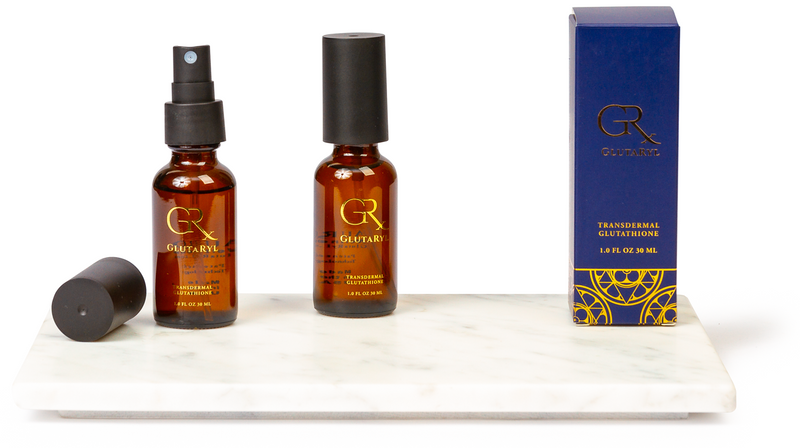
Bottom line: the best-case scenario with topical glutathione is usually “subtle improvement in appearance,” not a transformation. The worst-case scenario is irritation that sets you back. If your question is can you absorb glutathione topically, the more immediate consumer reality is whether your specific product is stable, tolerable, and consistent with your sunscreen + hydration habits.
What Research Suggests and What It Doesn't
Research on glutathione in skincare supports the idea that antioxidant systems matter for skin appearance. However, when people ask can you absorb glutathione topically, they’re often expecting a simple yes/no about delivery into deeper layers. Skin absorption depends on formulation (pH, penetration enhancers, molecular stability), and even if glutathione exists in the product, the active fraction that reaches the target can differ.
What research generally supports:
- Glutathione is an antioxidant that can influence oxidative stress pathways in skin biology.
- Topical antioxidants may help with the appearance of uneven tone in some users, especially when the routine includes sun protection.
- Formulation quality (and not just the presence of glutathione) changes outcomes.
What research doesn’t fully guarantee:
- Uniform, clinically proven “whitening” or fast results from every glutathione topical product.
- That the glutathione in a consumer product stays stable and performs the same way as in lab models.
- That results will be consistent across skin types, ages, and pigmentation causes.
Risks worth taking seriously: any brightening routine can irritate compromised skin, and irritation can worsen discoloration. If you’re considering glutathione topicals because you want to avoid stronger actives, that’s reasonable—but patch testing still matters. If you’re sensitive, start slowly, and don’t combine multiple new brighteners at once.
Ingredients, Formats, and Quality Signals
If you’re shopping for glutathione topicals, you’re really shopping for a system: glutathione plus a vehicle that keeps it stable and compatible with skin.
Common product forms you’ll see:
- Serums (often thin, water-based or gel-based; usually best for layering)
- Creams (thicker; can be helpful if you’re dry but sometimes heavier)
- Spot treatments (target small areas; check whether the formula is irritating)
- Masks or sheet masks (short contact time; results may be less consistent)
- Body products (fragrance and irritation risk can be higher due to broader coverage)
Quality signals to look for:
- Clear ingredient list (INCI names, not vague claims only)
- Fragrance-free or low-irritant formulas if you’re prone to redness
- Supporting antioxidants (like vitamin C derivatives, niacinamide, or other stabilizing agents—combinations may improve tolerability even if the exact glutathione behavior varies)
- Good packaging (dark or air-restricting bottles can be a stability plus)
- Reasonable usage instructions (a product that says “use twice daily everywhere, no patch test” is a red flag)
Practical “dose” reality: unlike prescriptions, many consumer products don’t disclose glutathione concentration clearly. So instead of obsessing over a number, focus on transparency, formula design, and your skin’s response. That approach is especially relevant to can you absorb glutathione topically—because your experience will tell you whether the product is compatible and effective for you.
Comparison of Common Options
| Format | Typical Dose/Use | Pros | Cons | Cost | Best For |
|---|---|---|---|---|---|
| Water-gel serum | 1x/day after cleansing (pea-size) | Layers easily; lighter feel | May not suit very dry skin | ~$15–$30 for 30 mL | Combination/oily users testing can you absorb glutathione topically |
| Cream/lotions | AM or PM; thin layer | More moisturizing; may reduce irritation | Heavier; some formulas can clog or sting | ~$20–$45 for 50–75 mL | Dry skin, people sensitive to stingy actives |
| Spot serum | Targeted to marks 1x/day | Less product in contact with full face | Results can be slow and limited to small areas | ~$18–$40 | Post-acne spots or mild uneven tone |
| Masks/sheets | 2–3x/week (short contact) | Feels spa-like; may boost comfort | Short contact time; consistency matters | ~$10–$30 per pack | When you want an occasional antioxidant boost |
| Body lotion | Daily after shower | Easy routine; covers larger areas | Fragrance/irritant risk higher; UV still key | ~$12–$35 | Body marks and uneven tone (with sunscreen when exposed) |
Buying Framework and Red Flags
Use this checklist to decide whether a glutathione topical is worth your time and money. It’s also how you answer can you absorb glutathione topically for your skin: you’re evaluating likelihood of stability, tolerability, and realistic expectation setting.
- Look for transparency: ingredient list is readable; formula isn’t just marketing terms.
- Check stability signals: better packaging (dark bottle, sealed pump) is a plus.
- Assess irritation risk: avoid heavily fragranced options if you’re redness-prone.
- Avoid miracle language: if it promises instant whitening or “guaranteed results,” move on.
- Patch test first: try behind ear or inner arm for 48 hours.
- Start one-new-thing: don’t add glutathione and a new retinoid/exfoliant the same week.
- Confirm SPF is part of the plan: if you won’t wear sunscreen, the payoff is usually smaller.
Red flags I’ve seen in the wild: products that claim “clinical whitening” without explaining ingredients, formulas that sting immediately on first application, and bundles that push multiple aggressive brighteners at once. If your goal is even tone, don’t let a glutathione product distract you from UV protection and barrier maintenance.
Common Mistakes and How to Avoid Them
Most disappointments aren’t about whether glutathione works in theory—they’re about trial mistakes. Here are the ones I’d most want 18–24-year-olds to avoid:
- Skipping sunscreen: if you’re chasing tone-evening, UV exposure can overpower incremental progress.
- Using too much, too fast: more layers doesn’t equal more absorption; it can equal more irritation.
- Stacking too many actives: if you add glutathione and also use a new exfoliant or retinoid, it becomes impossible to know what’s helping or hurting.
- Not giving enough time: a realistic window is 2–4 weeks for “look and feel,” and 6–8+ weeks for more stable changes in appearance.
- Continuing through irritation: redness, burning, swelling, or persistent bumps are not “purging.” Stop and reassess.
A consumer-friendly rule: if you can’t tolerate the formula, it’s not “failing”—it’s just not for you. That matters as much as the question can you absorb glutathione topically.
FAQ
Is it proven that you can absorb glutathione topically?
Evidence suggests topical antioxidants can influence skin biology and appearance, but “proven absorption” depends on the specific product’s formulation and stability. Many outcomes are cosmetic and variable, and not every product will deliver the same effect.
How long does it take for topical glutathione to show results?
Many people notice changes in appearance within 2–4 weeks, if they tolerate the product and maintain SPF. More meaningful tone shifts often take 6–8+ weeks. If there’s no improvement and no tolerance issues, reassess your routine before giving up at week 4.
What side effects can happen with topical glutathione?
Possible side effects include redness, itching, burning, dryness, or acne-like bumps—usually tied to the full formula (fragrance, preservatives, or penetration enhancers) rather than glutathione itself. Stop if irritation persists.
Can you combine glutathione topically with other brighteners?
Often yes, but combine cautiously. A common approach is to add one new brightening ingredient at a time (for example, glutathione first, then introduce another active later if your skin is stable). Avoid stacking multiple new strong actives in the same week.
Oral vs injection vs topical glutathione: which is best if you want absorption?
Topical options focus on skin-facing support and cosmetic appearance. Oral or injection approaches involve different routes, dosing, and medical oversight; they’re not interchangeable with skincare and carry different risk profiles. If you’re considering oral or injection, talk to a qualified clinician.
A Practical 2-Week Experiment Framework
If you’re trying to answer can you absorb glutathione topically for your skin, don’t guess. Run a simple trial that measures tolerance and early cosmetic changes.
| Day/Week | What to do | What to track | Decision rule |
|---|---|---|---|
| Days 1–2 | Patch test (inner arm/behind ear). No other new actives. | Redness, itching, bumps, burning | If irritated, don’t apply to face. |
| Days 3–7 | Apply 1x/day (AM or PM). Keep moisturizer + cleanser constant. | Comfort, dryness, texture changes | If stinging persists, stop. |
| Days 8–14 | Continue 1x/day. Be consistent with SPF if using in AM. | Tone appearance (photos), visible dullness | If no change but no irritation, consider continuing to 6–8 weeks. |
| End of Week 2 | Review notes. Decide whether to keep, swap, or pause. | Tolerance score (0–10) + photo comparison | If irritation occurred, pause and identify triggers. |
| If you quit early | Switch to gentler routine for 1 week. | Barrier recovery (less tightness, fewer bumps) | Only reintroduce after skin stabilizes. |
For a realistic consumer timeline: after 2 weeks, your best signal isn’t “miracle whitening”—it’s whether your skin tolerates the formula and whether the look is trending in the right direction. That’s the most reliable way to assess whether can you absorb glutathione topically in a way that matters to you.
About the Author
I’m Maya Chen, a skincare reviewer focused on ingredient literacy and routine consistency. I’ve tested and documented dozens of topical actives (including brighteners marketed for dark spots) over the last 6+ years, with particular attention to irritation patterns, layering compatibility, and how products behave over a realistic budget. My reviews emphasize what you can see at home: comfort, photo-based tone changes, and whether a product causes bumps or redness. This article is an informational consumer review, not medical advice, and it doesn’t promise treatment outcomes, cures, or guaranteed results. If you have persistent pigmentation, skin conditions, or severe reactions, consult a qualified professional.
Discussion